
Chander Vihar Nilothi : History, Population, Property
Chander Vihar Nilothi Introduction
Chander Vihar is one of West Delhi’s most recognized residential localities. Situated near Nilothi, Nangloi, Nihal Vihar, and Vikaspuri Extension, the area represents the transformation of rural Delhi into a vibrant urban neighborhood. Over the decades, agricultural fields evolved into residential colonies, commercial markets, schools, religious institutions, and thriving local businesses.
Location and Connectivity
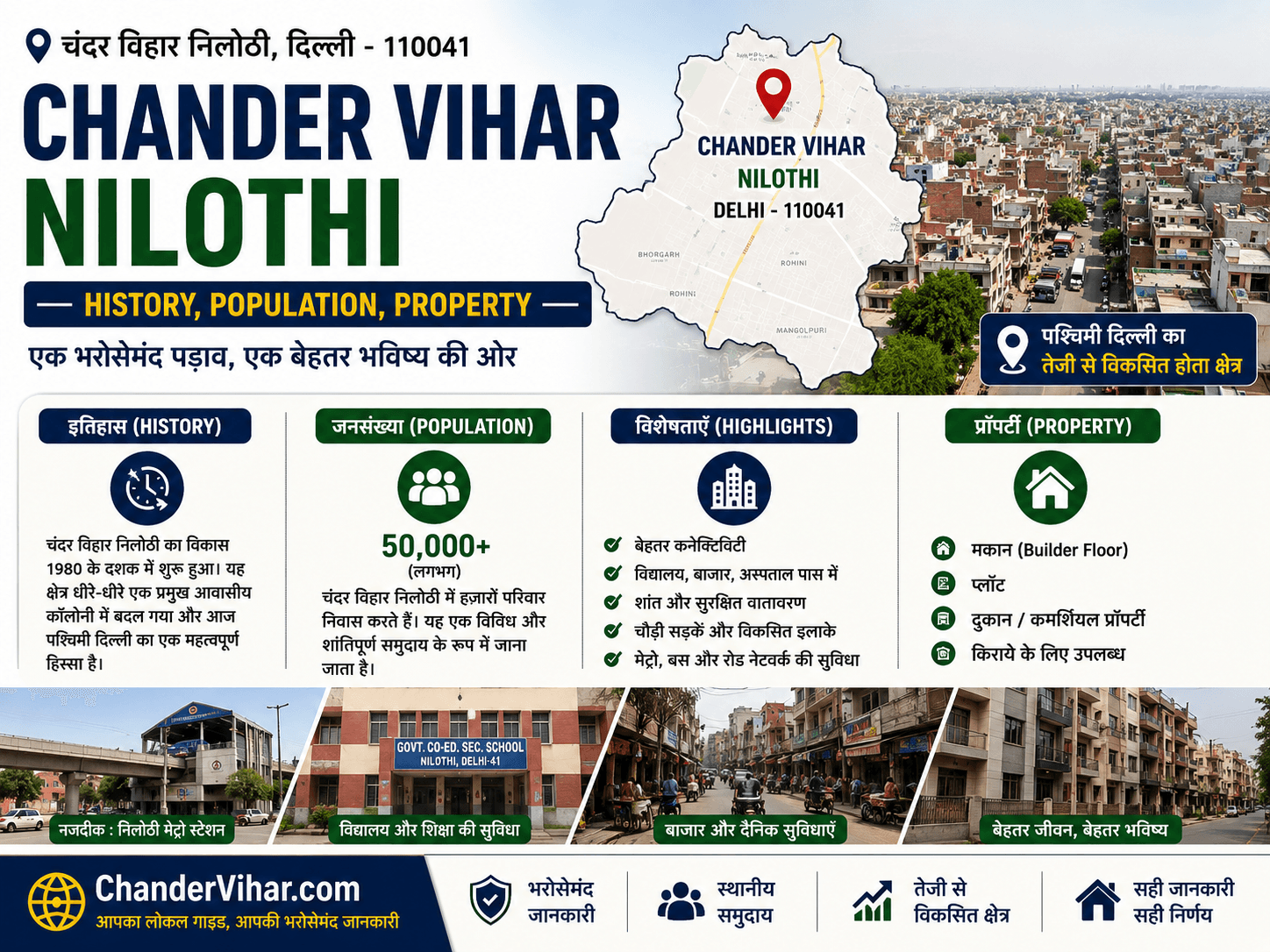
Chander Vihar falls under PIN Code 110041 and enjoys connectivity to Nangloi, Uttam Nagar, Paschim Vihar, Nilothi, and Vikaspuri. Residents benefit from road networks, nearby metro access, public transport, and local commercial centers.
History of Nilothi and Chander Vihar
Before urbanization, the area consisted largely of agricultural lands associated with Nilothi Village. Farming, livestock, tube wells, village ponds, and seasonal cultivation formed the economic backbone of the region. As Delhi expanded during the 1970s–1990s, demand for housing transformed the landscape into plotted colonies and residential developments.
Population and Demographics
The broader Nilothi region has experienced rapid population growth. The area includes Punjabi families, Jat communities, Haryanvi-speaking residents, migrants from Uttar Pradesh and Bihar, professionals, business owners, and skilled workers. The locality is known for strong community relationships and family-oriented living.
Religious Composition (Nilothi Census Town figures often cited):
- Sikh: 49.43%
- Hindu: 47.20%
- Muslim: 3.03%
- Others: Less than 1%
Political Representation
Chander Vihar is generally associated with the Nangloi Assembly Constituency. The area falls under the North West Delhi Parliamentary Constituency. Residents are represented through MLA, MP, and municipal governance structures responsible for infrastructure, sanitation, roads, and civic development.
Religious and Cultural Heritage
The area is known for strong Sikh heritage, active Gurudwaras, community langars, Nagar Kirtans, and Gurpurab celebrations. Hindu temples dedicated to Shiva, Hanuman, Durga Mata, Radha Krishna, and Shani Dev are important centers of worship. Mosques serving nearby communities contribute to the religious diversity and harmony of the locality.
Aggarwal Chowk – The Heart of Chander Vihar
Aggarwal Chowk functions as the most recognized landmark in Chander Vihar. It serves as a commercial center, transportation point, meeting place, and reference location for businesses and residents. Sweet shops, medical stores, clothing shops, hardware suppliers, and daily-use businesses operate around the chowk.
Sunday Bazaar and Pradhan Market
The Sunday Bazaar attracts shoppers from Chander Vihar, Nilothi, Nihal Vihar, and surrounding localities. Visitors purchase clothing, footwear, toys, accessories, and household products at affordable prices. Pradhan Market serves as a commercial backbone supplying groceries, hardware items, medicines, and daily necessities.
Education and Healthcare
Educational growth has played a major role in local development. Families increasingly prioritize schools, coaching centers, computer institutes, and professional education. Healthcare services include clinics, pharmacies, diagnostic centers, and nearby hospitals serving the broader West Delhi region.
Property Market and Real Estate
Chander Vihar remains attractive due to affordability, rental demand, and strategic location. Common property types include builder floors, independent houses, rental accommodations, and commercial shops. Growing connectivity and infrastructure improvements continue to support real estate demand.
Famous Personalities and Local Identity
The locality is often associated with references to Punjabi singer Daler Mehndi’s farmhouse area. Historical and political figures connected to the broader Nilothi region have also contributed to the identity and development of the area.
Future Development
Residents continue to seek better roads, improved drainage, parking solutions, traffic management, green spaces, and enhanced public facilities. Future growth is expected to strengthen the area’s position as a desirable residential and commercial destination in West Delhi.
Conclusion
Chander Vihar is more than a residential colony. It reflects the story of Delhi’s urban transformation, blending village history, cultural heritage, religious diversity, markets, education, property development, and community life. From Aggarwal Chowk to Sunday Bazaar and from Nilothi’s agricultural roots to modern real estate opportunities, Chander Vihar remains one of West Delhi’s most distinctive neighborhoods.